NHL 27 Beginner Guide: How to Get Started
An NHL 27 beginner guide covering control schemes, which mode to start with, basic offense and defense, goalie play, and how player ratings and OVR work.
Updated 2026-07-13
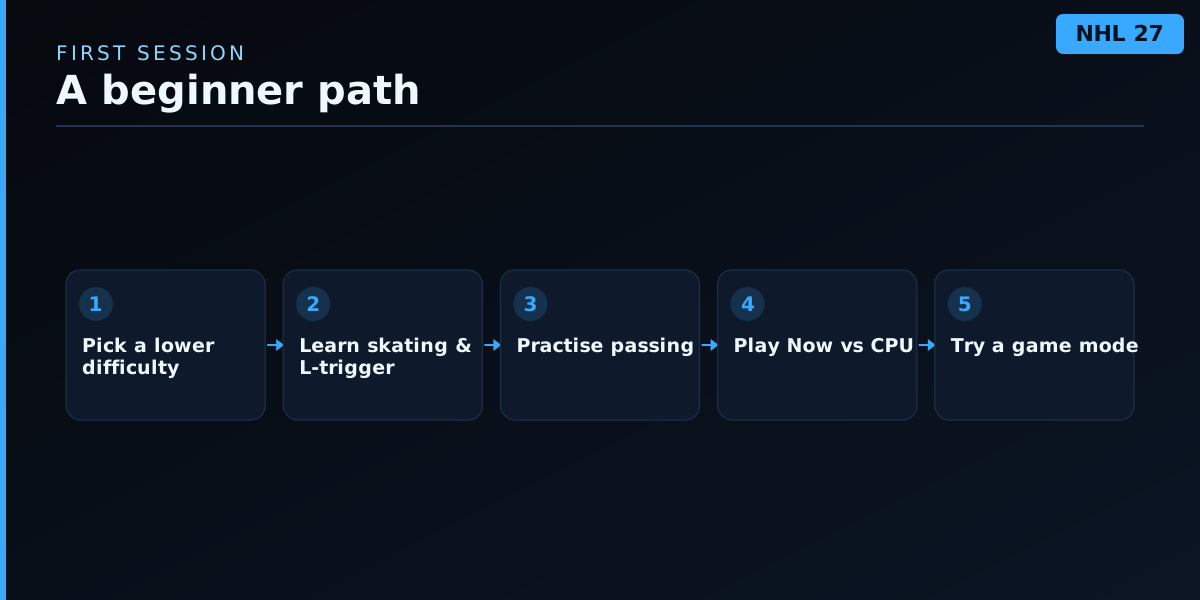
Ice hockey moves fast, and the first hour with a new EA Sports title can feel overwhelming: two analog sticks, a dozen buttons, and four large game modes competing for your attention. This NHL 27 beginner guide breaks the game into an order you can actually follow, starting with the one choice that shapes everything else — your control scheme — then moving through mode selection, basic offense, defense, goaltending, and how player ratings turn into on-ice results.
Read this NHL 27 beginner guide top to bottom before your first game, or jump to the section you need. Every step is something you can drill in a single skate-around or a short exhibition match. NHL 27 is expected to arrive in mid-September 2026 on PlayStation 5 and Xbox Series X|S; the fundamentals below carry over from NHL 26 and apply the moment you load in. If a term is new, the glossary defines it in plain language.
Step 1: Pick a control scheme first
Before you touch a mode, open the controller settings and choose a scheme, because it decides how you shoot, pass, and deke. NHL 27 is expected to keep the three schemes from NHL 26, and the right pick depends on your experience with sports games. For a full breakdown, see the controls page; the table below is the short version.
| Scheme | How it works | Best for |
|---|---|---|
| Total Control | Skill moves mapped to buttons | First-timers and returning casual players |
| Skill Stick | The right stick performs most dekes and dangles | Players who want full manual control |
| Hybrid | Mixes button presses with right-stick inputs | Intermediates bridging the two |
Start with Total Control. It lets you trigger dekes and moves with a single button so you can focus on skating, reading the play, and finding open ice instead of fighting the right stick. Once passing and positioning feel automatic, switch to Hybrid, then Skill Stick, where the right stick unlocks the deepest control over toe drags and dangles. Rebind nothing at first — learn the defaults, because every guide, tooltip, and online opponent assumes them.
Step 2: Choose your first mode
NHL 27 is expected to return with four pillars, each a different way to play. Do not start in Hockey Ultimate Team; it rewards players who already understand the on-ice game. Warm up in Play Now exhibitions, then pick a mode below. All four are detailed on the modes hub.
| Mode | What it is | Start here if… |
|---|---|---|
| Be A Pro | Single-player RPG career following one skater | You want a guided, story-driven path |
| Franchise | Long-term GM and dynasty: trades, draft, cap, scouting | You like managing a team over seasons |
| World of Chel | Online arenas: Ones, Threes, Drop-In, and EASHL 6v6 Clubs | You want to play with or against people |
| Hockey Ultimate Team | Card-collecting team-builder with its own economy | You are comfortable and want long-term goals |
For learning the game, Be A Pro is the gentlest on-ramp: you control one player, the camera stays tight, and voice-acted cutscenes give your career shape. When you feel ready for other people, World of Chel drops you into Ones and Threes, small-sided arenas where mistakes are cheap and reps come fast; its free Season Pass and three class-free X-Factor slots let you experiment. Save Hockey Ultimate Team for later — its Seasons, Ranked, and Cup Chase sub-modes are best once your stick skills hold up against real opponents.
Step 3: Basic offense — passing, one-timers, dekes
Offense in NHL 27 rewards patience over speed, and this is the part of the NHL 27 beginner guide you will revisit most. Three habits win most of your early goals:
- Pass to move the goalie. Crisp puck movement pulls the goaltender across the crease and opens the far side. Do not skate into traffic; make one extra pass first.
- Set up one-timers. When a teammate has the puck, aim your stick at the passing lane and load the shot as the pass travels, then release on contact. A well-timed one-timer beats a goalie who is still sliding.
- Keep dekes simple. Start with a single move to change the puck’s angle — a basic toe drag or a fake-shot-into-pass — before attempting between-the-legs or lacrosse moves. Overhandling in the slot loses the puck to a poke check.
Protect the puck with your body between the defender and the puck, use the boards to shield it along the wall, and cycle rather than force low-percentage shots. Wrist shots are more accurate; slap shots carry more power. Pick the wrist shot when you have a lane and the slap shot only with time and space at the point.
Step 4: Basic defense — positioning, poke check, angling
Most beginner goals are conceded, not scored against you, so defense is where you improve fastest. Position before you react: stay between your check and your own net, and keep your stick in the passing lane. Skate backward with the attacker rather than lunging.
Reach for the puck with the poke check when the attacker exposes it, but poke early and miss and you are beaten — time it for the moment the puck sits flat on their stick. Angling is safer than hitting: steer the puck-carrier toward the boards where they run out of room, then use a stick lift or a board pin to strip the puck. Save big body checks for when they are clearly worth it; a missed hit takes you out of the play entirely. If you do line up a hip check, remember its power scales with your turn angle, so square up before contact. Shot blocking closes down point shots, but going down early leaves a rebound; stay on your feet until the shooter commits.
Step 5: Goalie basics
Even if you never play a full match in net, understanding the goalie helps you score. NHL 27 is expected to keep the Crease Control System with its library of 80-plus save animations and a consecutive-saves mechanic that rewards square, controlled positioning over scrambling. If you take control of the goalie:
- Track the puck and stay centered on it rather than guessing the shot.
- Move post to post with small, deliberate slides — overcommitting opens the far side that passing plays exploit.
- Control rebounds by absorbing shots into your body or steering them to the corner, not back into the slot.
- On breakaways, hold your depth and react to the shooter’s first move instead of poking blindly.
As a skater, use this knowledge in reverse: force the goalie to move, then shoot into the space they vacate. The same read tells you when not to shoot — if the goalie is square and set, one more pass to drag them across the crease is worth more than a hopeful shot into the chest. Watching how the CPU goalie reacts, even for a few games, teaches you more about scoring than any highlight reel.
Step 6: How ratings and OVR work
Every player carries an Overall rating (OVR), a single number that summarizes roughly 25 skater attributes — from Acceleration, Agility, and Speed to Passing, Puck Control, Deking, Body Checking, and Defensive Awareness. Goalies use a separate set of about 11 attributes covering glove, stick, five-hole, positioning, and rebound control. OVR is a shorthand, not the whole story: a 90-rated grinder and a 90-rated sniper play nothing alike, so read the individual attributes that matter for the role you want. The ratings page explains the full schema; no NHL 27 values exist until the game is out.
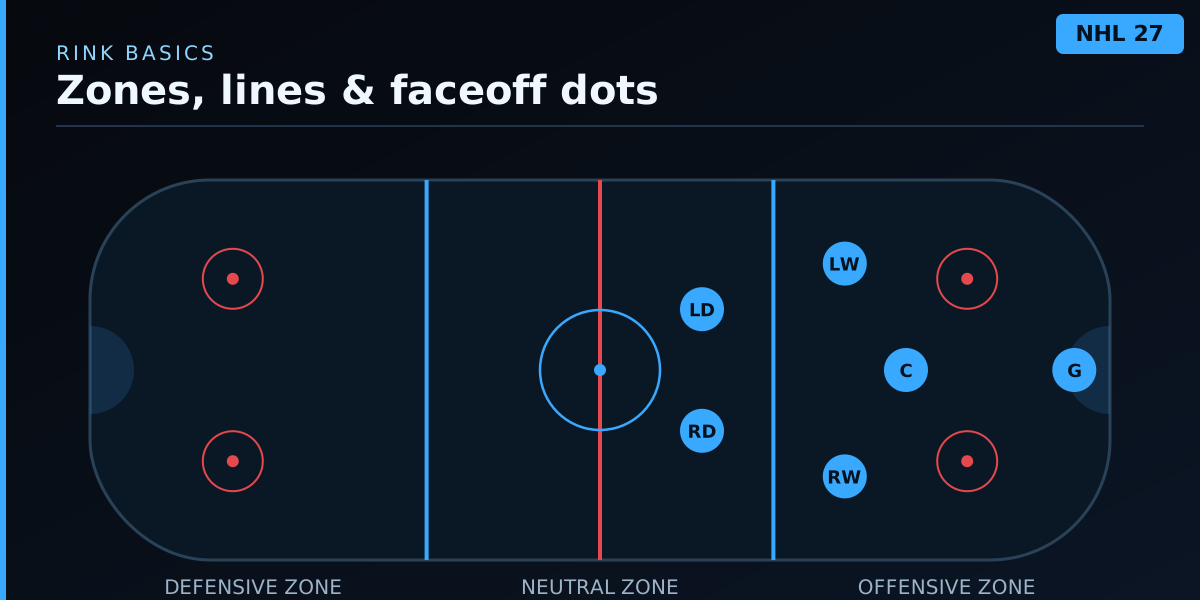
Positions are C, LW, RW, LD, RD, and G, and a player’s attributes are tuned for their spot. On top of the base numbers, NHL 27 is expected to keep 28 X-Factors and Superstar abilities across five categories and three tiers — situational boosts like a harder one-timer or a stickier poke check. Ignore X-Factors while you learn the basics; a beginner benefits far more from clean passing and good positioning than from an ability that only fires in specific moments.
Next steps after this NHL 27 beginner guide
Once these six steps feel natural, deepen your knowledge on the gameplay page, which covers deking, checking, and the finer mechanics this NHL 27 beginner guide only introduces. The order matters more than raw practice hours: control scheme, then a friendly mode, then offense, defense, and goaltending built one habit at a time. If you want a specific next destination, the controls guide drills the inputs behind every move here, and the mode pages under guides show where to take those skills.
Come back to this NHL 27 beginner guide whenever a new habit stalls. Play a short exhibition, fix one thing — cleaner passes, earlier poke checks, tighter goalie depth — and let each fix settle before you add the next. Progress in NHL 27 compounds: solid positioning makes your offense easier, and confident puck movement makes defending simpler because you spend more time with the puck. That loop, not any single trick, is what turns a beginner into a competent player.