NHL 27 HUT Beginner Guide
This NHL 27 HUT guide covers opening packs, building a first squad, chemistry basics, earning coins without spending, and modes from Ranked to Weekend Season.
Updated 2026-07-13
Hockey Ultimate Team (HUT) is the card-collecting mode where you open packs, assemble a squad across all six positions, and take it online or offline for rewards. This NHL 27 HUT guide is built on the NHL 26 structure, which is confirmed for that title and expected to return in NHL 27 after the July 16, 2026 reveal. Nothing here needs real money: the mode hands out coins, packs, and player items for playing, and a patient free-to-play start can reach competitive rosters within weeks.
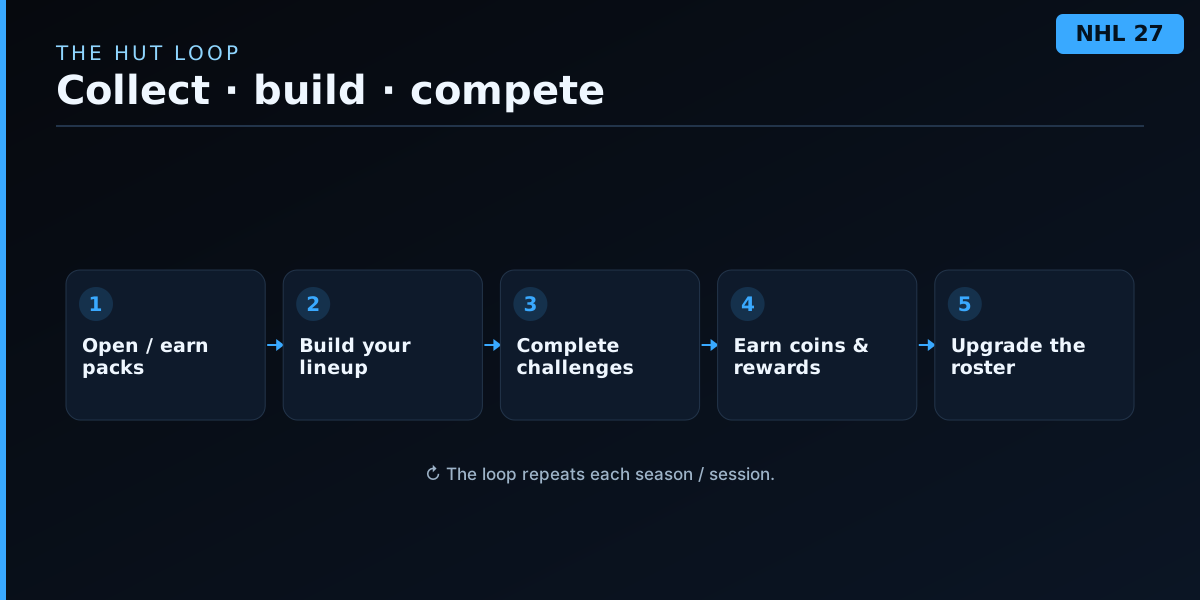
The core loop is simple. Play matches or objectives, earn coins and packs, pull player cards, slot them into lines, and use chemistry to lift their attributes. This guide walks through your first packs, squad building, chemistry, the offline and online modes, and how to bank coins without spending a cent. For the full mode overview see Hockey Ultimate Team; for how player attributes work, see ratings.
How NHL 27 HUT works
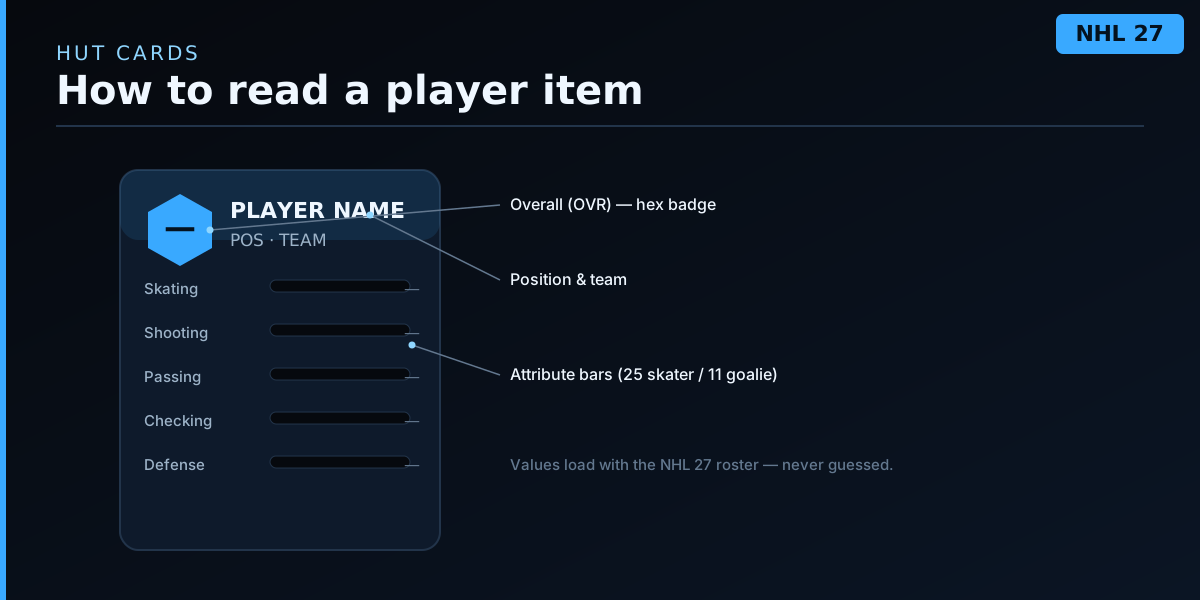
HUT is a persistent squad-building mode separate from Franchise or Be A Pro. Every player is a collectible card with an overall rating (OVR) and the same skater or goalie attributes used across the game: Speed, Acceleration, Deking, Wrist Shot Power, and Body Checking for skaters, plus Glove High, Five-Hole, and Positioning for goalies. You fill six positions per line — C, LW, RW, LD, RD, and G — with a bench and reserves behind them. This NHL 27 HUT guide assumes the NHL 26 framework returns, since EA has not revealed NHL 27’s HUT details ahead of the trailer. Cards arrive in tiers and themed programs: Rookies, Heroes, Icons, and Captains sets raised base players across the NHL 26 season. Your active squad OVR and its chemistry both feed how you perform, so the early goal is a balanced lineup in the mid-80s rather than one expensive superstar surrounded by weak cards. Depth wins more games than a single hero card.
Opening your first packs and building a squad
HUT starts you with a low-rated squad and a batch of starter packs. Open them, but do not auto-sell everything. Keep the highest-OVR player at each position, then quick-sell duplicates and off-position cards you cannot use for a small coin refund. A clean starter line beats a random one: pair a passer at center with two finishers on the wings, and put your two best defensemen together. Complete the opening objectives first — they hand out coins, packs, and untradeable starter players that carry you through the early matches. Spend early coins on cheap 80-83 OVR players in the auction house rather than gambling on packs. Packs are pure variance; the auction house lets you buy exactly the position and rating you need. Read the beginner guide for stick and control basics so you actually win the games that pay out. Build depth to four full lines and a second goalie before chasing any single high-end card, because injuries and fatigue in longer modes punish thin rosters.
Chemistry and synergy basics
Chemistry rewards linemates who share connections. In the NHL 26 structure, placing players from the same real NHL team, the same league, or the same nationality on a line builds synergy that lifts their attributes above the printed rating. A three-forward line of teammates, or a defense pair from one country, pushes speed, passing, and shooting upward — which often matters more than a slightly higher-OVR card sitting with no links. Because the exact NHL 27 chemistry rules reveal with the game, treat this as the returning framework rather than final numbers. The practical rule: build lines around a theme (one team, one nation, or one league) instead of scattering your best cards. A linked 84-OVR line frequently outperforms an unlinked 87 line. Bench players contribute nothing to on-ice chemistry, so put your synergy where it plays. As you collect, rebuild lines around whichever connection your best cards share, and check the glossary if a synergy or program term is unfamiliar.
The HUT modes
HUT splits into offline modes for learning and farming and online modes for the biggest rewards. Start offline to build coins and confidence, then move online once your squad reaches the mid-80s. The core modes expected to return:
| Mode | Play | What it is |
|---|---|---|
| Ranked | Online | Competitive ladder that replaced Rivals; climbing a tier is locked in with no demotion |
| Cup Chase | Offline | 18-game season followed by a best-of-3 playoff for rewards |
| Wildcard | Draft | Rotating rule sets each event, drafting a temporary lineup |
| HUT Moments | Offline | Short scenario challenges with fixed objectives |
| Weekend Season / HUT Champs | Online | Timed weekend competition paying the largest rewards |
| HUT Seasons | Offline & online | Ongoing seasonal progression that ties the modes together |
Begin with HUT Moments and Cup Chase — no ranked pressure, and both pay coins and packs while you learn the controls. Wildcard’s rotating rules give a change of pace and reward experimentation without risking your main squad. Save Ranked and Weekend Season for when your lineup is competitive, because that is where the top-tier player rewards live.
Earning coins and rewards without spending
You never need to buy coins. The reliable income streams are daily and weekly objectives, HUT Moments payouts, Cup Chase rewards, and selling tradeable cards you pull but will not play. List spare high-OVR pulls on the auction house at market price instead of quick-selling them; the market pays far more than the fixed quick-sell value. Sniping — buying underpriced Buy Now listings and reselling at market — is the fastest coin method once you learn player prices, though it takes patience and screen time. Complete set and collection rewards that grant untradeable players and packs for turning in cards you were going to sell anyway. Avoid spending coins on packs early: the same coins buy a guaranteed upgrade in the auction house instead of a gamble. Save toward one meaningful position rather than spreading coins thin across the roster. Weekend competitions pay the largest hauls, so once your squad is ready they become your main earner. The FAQ covers pricing and edition questions if you are weighing whether to spend at all.
First-week priorities in this NHL 27 HUT guide
Work through this in order. First, finish every starter and welcome objective for free coins, packs, and untradeable players. Second, build one linked, balanced line rather than hoarding your single best card. Third, learn the controls in offline Moments and Cup Chase so you win the games that pay out — the wider modes breakdown and the beginner guide cover deking, checking, and control schemes. Fourth, bank coins and hold off on packs; buy exact-fit 80-83 players from the auction house. Fifth, keep chemistry intact as you upgrade, swapping in cards that share a team, league, or nation. Sixth, push into Ranked and Weekend Season only once your squad sits in the mid-80s, so you are competitive when the top rewards are on the line. Follow that sequence and this NHL 27 HUT guide gets you a competitive, fully free squad well before the seasonal content ramps up.